


Definition
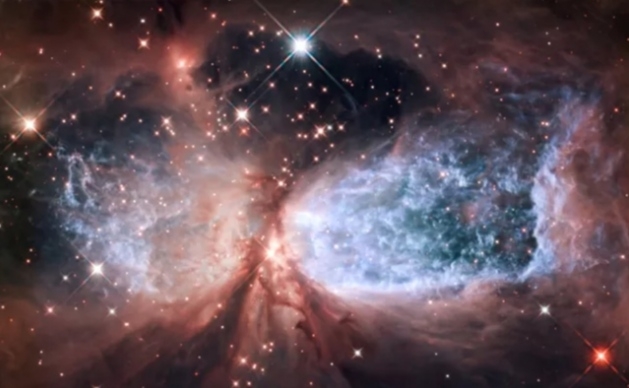
Astrophysics is the branch of astronomy that studies the physical laws and chemical properties of celestial bodies such as stars, planets, galaxies, and nebulae (clouds of gas and dust from which stars are born).
It seeks to explain how the universe works its origin, evolution, structure, and future.
Introduction to Astrophysics
Astrophysics began with a simple yet revolutionary idea: the laws of physics on Earth apply everywhere in the universe.
This idea was first firmly established by Isaac Newton, through his law of universal gravitation, which states that every particle attracts every other particle in the universe with a force.
Newton proved that the same physical laws governing falling apples also control the motion of planets and stars laying the foundation of modern astrophysics.
Ten Historical Moments That Shaped Astrophysics
1. Dark Lines in the Solar Spectrum (1802–1814)
When sunlight passes through a prism, it forms a spectrum of colors. Scientists observed dark absorption lines within this spectrum, revealing the presence of elements like hydrogen, calcium, sodium, magnesium, and iron in the Sun.
This discovery connected chemistry with astronomy and gave birth to spectroscopy.
2. Classification of Stars (1885)
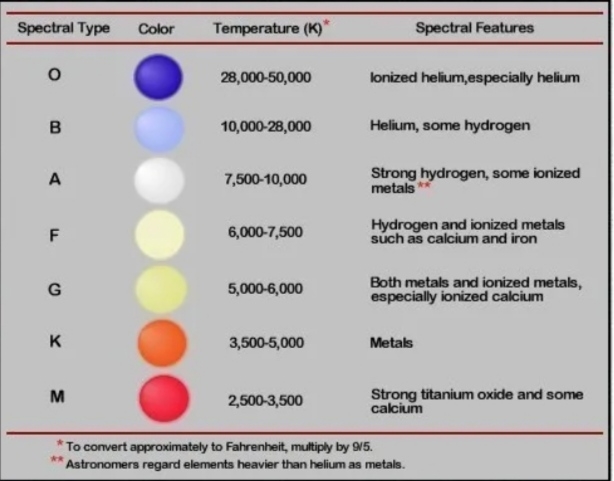
Under the Harvard Classification System, astronomers led by Edward Pickering classified nearly 400,000 stars into spectral types.
This system became a cornerstone of stellar astrophysics.
3. Hydrogen–Helium Composition of Stars (1920s)
Sir Arthur Eddington proposed that stars are primarily composed of hydrogen and helium, and that their energy comes from nuclear fusion in their cores.
This explained why stars shine for billions of years.
4. Cecilia Payne’s Doctoral Thesis (1925)

Cecilia Payne proved that stars are overwhelmingly made of hydrogen and helium.
Her work laid the foundation for stellar evolution and revolutionized astrophysics.
5. The Expanding Universe – Hubble’s Law
Edwin Hubble demonstrated that galaxies are moving away from us and the farther they are, the faster they recede.
This discovery confirmed that the universe is expanding and that the Milky Way is not alone.
6. Detection of Radio Waves from Space (1932)
Karl Jansky detected radio waves coming from the center of the Milky Way, marking the birth of radio astronomy a new way to study the universe beyond visible light.
7. Discovery of the First Black Hole (1971)
Astronomers detected intense X-rays from a system called Cygnus X-1, identifying it as the first confirmed black hole.
8. Discovery of the First Exoplanets (1992)
Aleksander Wolszczan and Dale Frail discovered planets orbiting a pulsar.
By 2020, over 4,000 exoplanets had been confirmed opening the search for extraterrestrial life.
9. Detection of Gravitational Waves (2016)
LIGO detected ripples in spacetime caused by merging black holes, confirming a prediction made by Einstein a century earlier.
10. First Image of a Black Hole (2019)
The Event Horizon Telescope captured the first-ever image of a black hole at the center of the M87 galaxy, a historic moment in astrophysics.
Books to Refer (For Astrophysics Enthusiasts)
- Fundamental Astronomy — Karttunen & Kröger
- An Introduction to Astrophysics — Baidyanath Basu
- Schaum’s Outline of Astronomy — Sten F. Odenwald
- An Introduction to the Study of Stellar Structure — S. Chandrasekhar
- Astrophysical Concepts — Martin Harwit
- Essential Astrophysics — Kenneth R. Lang
Final Thought
Life is a chain of events, and every discovery begins with curiosity.
Never give up you never know when your eureka moment will strike.
“Survival is not about being fearless, it’s about making decisions and moving forward despite fear.”